

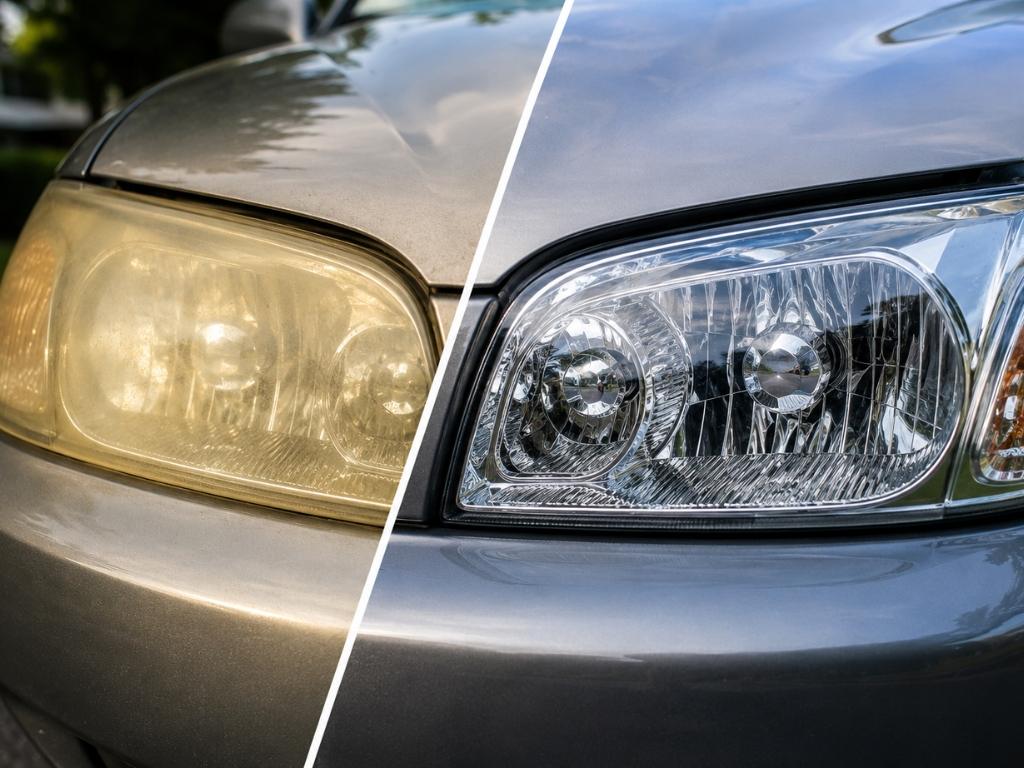
Cloudy, yellow, or dull headlights can make an otherwise well-maintained vehicle look older than it is. More importantly, deteriorated lenses can interfere with the amount of light reaching the road at night.
The question is whether those headlights need to be replaced or whether headlight restoration services can bring them back to life. The answer depends on where the damage is located and how severe it has become.
Here are the problems professional headlight restoration can and can’t address.
What Do Headlight Restoration Services Actually Fix?
Most modern headlight lenses are made from durable polycarbonate plastic, but years of exposure to sunlight, weather, road contaminants, and everyday driving can gradually wear down their protective surface.
As this deterioration develops, headlights can become cloudy, yellowed, or dull. Professional headlight restoration services address these exterior problems through methods such as cleaning, sanding, polishing, and applying UV protection.
So, which types of headlight damage can actually be restored? Here are some of the most common problems that respond well to professional restoration.
1. Yellow or Discolored Headlight Lenses
Yellow headlights are one of the clearest signs of exterior deterioration.
Sunlight and environmental exposure can gradually degrade the protective coating over the polycarbonate lens. As that surface deteriorates, the headlights may develop a yellow or brownish appearance.
Restoration removes the damaged surface layer and polishes the underlying material. When the discoloration is primarily external, this can significantly improve lens clarity.
2. Cloudy and Hazy Headlights
Does the headlight look as though it has a cloudy film covering it?
Exterior oxidation is often responsible. Instead of light passing through a clear lens, the deteriorated surface scatters some of that light.
Cleaning alone usually won’t remove advanced oxidation. Restoration addresses the affected surface directly through controlled sanding and polishing.
However, there is an important distinction. If the haze or condensation is inside the headlight, exterior restoration won’t solve the underlying problem.
3. Surface Oxidation
Oxidation develops gradually as headlights are exposed to UV radiation, heat, moisture, road debris, and other environmental conditions.
You might first notice a slightly dull surface. Over time, the lens can become rough, yellow, or opaque. This buildup can also affect headlight performance. AAA found that deteriorated headlights produced only 22% of the low-beam light output of new original-equipment headlights in its testing.
Professional restoration removes the compromised material rather than simply covering it with polish. A protective finish can then be applied to help protect the restored surface.
4. Minor Surface Scratches
Not every scratch means you need a new headlight.
Shallow scratches and scuffs may be reduced as part of the sanding and polishing process. The important factor is depth.
A scratch affecting only the surface is much different from a deep gouge or crack extending through the lens. A technician can inspect the damage and determine whether safely removing enough material to improve it is realistic.
5. Dull or Weathered Lenses
Sometimes headlights aren’t badly yellow or cloudy. They simply look worn after years on the road. If the housing and internal components remain functional, restoration may improve clarity and appearance without requiring an entirely new assembly.
Headlight Problems That Restoration Can’t Fix
Headlight restoration services aren’t designed to repair every headlight problem. They primarily address the exterior lens surface.
If the problem involves structural damage, electrical components, or the inside of the assembly, polishing the exterior won’t fix it.
1. Cracked or Broken Headlight Lenses
Sanding can remove a thin layer of deteriorated plastic. It cannot rebuild a cracked lens. Cracks can also create openings where water and contaminants enter the headlight assembly. Depending on the extent and location of the damage, repair or replacement may be necessary.
2. Moisture or Condensation Inside the Assembly
Exterior haze and internal condensation can look similar from a distance. Look more closely. If droplets or moisture are behind the lens, the problem isn’t something exterior polishing can correct. Persistent moisture may indicate a damaged seal, housing, vent, or another issue that needs to be diagnosed.
3. Burned-Out or Failing Bulbs
A clear lens won’t make a burned-out bulb work. If one headlight is significantly dimmer than the other, don’t immediately assume oxidation is responsible. Check the condition of the lens and the bulb. Bulb replacement or further diagnosis may be needed if the lens is already clear.
4. Electrical and Wiring Problems
Flickering, intermittent operation, or headlights that won’t turn on can indicate electrical trouble. Possible causes include wiring, connectors, fuses, control modules, or other components. Headlight restoration doesn’t address these systems.
4. Deep Cracks, Gouges, or Severe Physical Damage
Some surface imperfections can be sanded down. Severe physical damage is another matter. Attempting to remove excessive material to eliminate a deep gouge could compromise the lens rather than improve it. An inspection is the safest way to determine whether restoration remains appropriate.
5. Damaged Internal Components
Headlight assemblies contain more than a bulb and clear exterior lens. Depending on the design, they may include reflectors, projectors, adjusters, and other internal components.
If those parts are damaged or deteriorated, making the exterior lens crystal clear won’t correct the underlying problem.
How Much Does It Cost to Restore a Headlight?
Professional headlight restoration typically costs around $50 to $150 per headlight, or about $100 to $300 for a pair, depending on the service provider and the amount of work required.
The cost of headlight restoration services can vary based on the severity of oxidation, vehicle design, local labor rates, preparation required, and type of protective coating applied. A lightly hazed lens may cost less to restore than a heavily oxidized headlight requiring multiple sanding and polishing stages.
When comparing prices, check what the service includes. Some providers may offer basic polishing, while others include thorough surface preparation and UV protection for longer-lasting results.
Restoration vs. Replacement: Which Is More Cost-Effective?
Restoration may be the practical choice when the headlight assembly works correctly and deterioration is limited to the exterior surface.
Replacement becomes more relevant when you have a cracked housing, severe structural damage, failed internal components, or another problem restoration cannot address.
Before purchasing a complete replacement assembly, have the existing headlights evaluated. You may discover that the problem is restorable.
Restore Your Headlights with AMB Auto Glass and Window Tint
Cloudy, yellow, or oxidized headlights don’t always need to be replaced. When the damage is limited to the lens surface, professional headlight restoration services can improve clarity and refresh your vehicle’s appearance.
If your headlights are starting to look dull or hazy, AMB Auto Glass and Window Tint can help determine the right solution. Contact our team today to schedule your headlight restoration service and get your headlights looking clear again.