

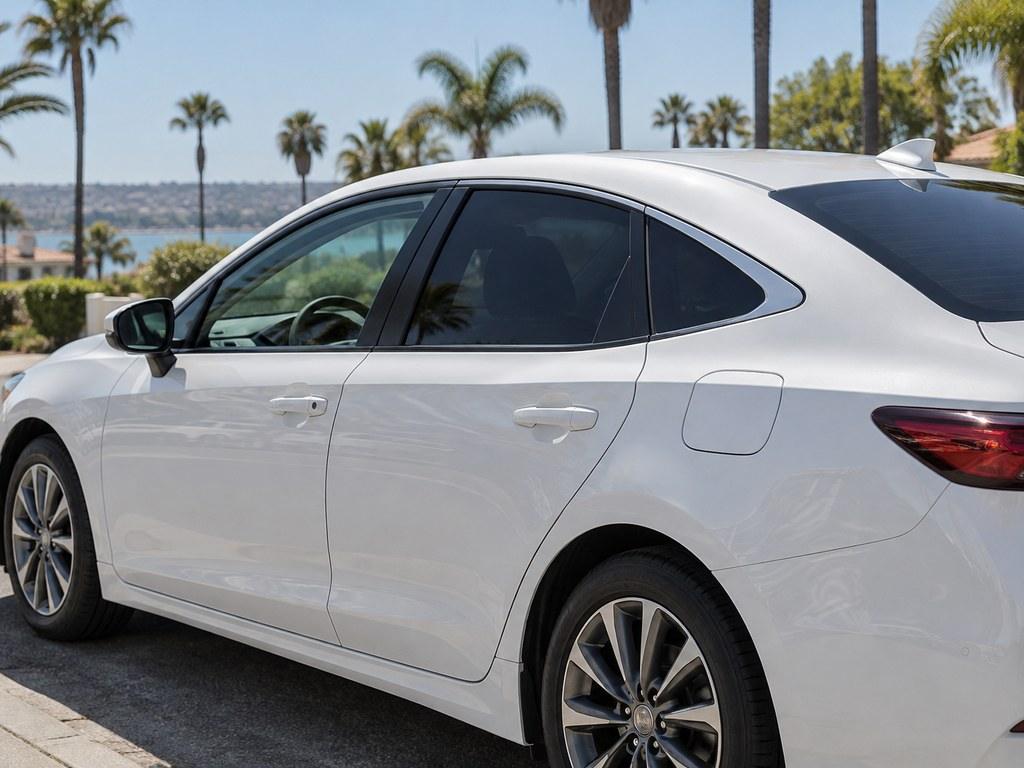
San Diego’s sunshine makes window tint one of the most popular upgrades we install, even in the cooler months when the low winter sun shines straight into the cabin. But choosing between 35 percent and 20 percent window tint involves more than looks.
Darker film does not always mean better heat or UV protection, and California law limits where each level can go. This guide explains what the numbers mean, which windows they are legal on, and how to pick the right shade for daily driving.
Quick Answer: 35% vs 20% Tint at a Glance
| Question | 35% tint | 20% tint |
|---|---|---|
| How much visible light gets through? | About 35% (blocks about 65%) | About 20% (blocks about 80%) |
| Privacy from outside | Moderate | High, interior is hard to see |
| Night visibility from inside | Easier | Noticeably darker, especially when reversing |
| Legal on front side windows in California? | No | No |
| Legal on rear side windows and rear window? | Yes (rear window needs dual outside mirrors) | Yes (rear window needs dual outside mirrors) |
| Does it decide heat rejection? | No, film type (ceramic vs dyed) matters more | No, film type (ceramic vs dyed) matters more |
What Do 35% and 20% VLT Actually Mean?
Window tint percentages refer to Visible Light Transmission (VLT), the share of visible light that passes through the glass and film. The lower the VLT number, the darker the tint.
- 35 percent window tint lets about 35% of visible light through and blocks about 65%. It gives moderate privacy while keeping a brighter view from inside.
- 20 percent window tint lets about 20% of visible light through and blocks about 80%. It looks noticeably darker and makes the interior hard to see from outside.
Although 20% tint offers more privacy, it can make nighttime driving harder, particularly when reversing or on poorly lit roads.
Remember that factory glass already has its own VLT. Adding aftermarket film lowers the combined light transmission, so the final number on your car can be darker than the film’s advertised rating.
Is 20 Percent Window Tint Legal in California?
On some windows, yes. California’s rules are set by California Vehicle Code Section 26708, and they depend on which window you tint. Our full guide to window tinting laws in San Diego covers the details.
Windshield
Aftermarket tint is not allowed across the main viewing area of the windshield. Transparent material is allowed only on the topmost portion, with its bottom edge at least 29 inches above the driver’s seat (measured as the code describes). It also cannot be red or amber or reflect glare more than the bare windshield.
Front Side Windows
The code allows only clear, colorless, transparent film on the front side windows. The film must have at least 88% VLT, and the glass with film applied must still meet the federal 70% light transmittance standard. So neither 35% nor 20% film is legal on the front side windows for ordinary drivers. The only exception is a medical exemption, which requires a signed letter from a licensed physician or optometrist and covers specific sun screening devices that cannot be used during darkness.
Rear Side Windows
Side windows to the rear of the driver are exempt from the code’s restriction, so 35%, 20% or darker film is allowed there.
Rear Window
Darker tint is allowed on the rear window as long as the vehicle has outside mirrors on both the left and right sides that give the driver a view at least 200 feet to the rear.
Noncompliant tint can lead to a citation and an order to remove the film. A reputable installer should tell you which windows each film is legal on before any work begins.
Does Darker Tint Block More Heat?
Not necessarily. A common misconception is that darker tint always means a cooler car. While 20 percent window tint blocks more visible light than 35 percent, actual heat rejection depends on the film’s materials and technology.
When you compare films, look at these specifications:
- Visible light rejection: How much visible light the film stops.
- UV rejection: How well the film blocks ultraviolet radiation.
- Infrared rejection: How much infrared (heat) energy the film rejects in a stated wavelength range.
- Total Solar Energy Rejected (TSER): The share of total incoming solar energy the glass and film reject together.
A quality 35% ceramic film can reject more total solar energy than a basic 20% dyed film, even though it looks lighter. Always compare the manufacturer’s published TSER figures for the exact films you are considering.
UV protection matters too. According to the World Health Organization), UVA accounts for approximately 95 percent of the UV radiation reaching the Earth’s surface, and it contributes to skin ageing and wrinkling. Film with verified UV blocking protects you and your interior year round, not just in summer.
Ceramic vs Dyed Tint: Does the Film Type Matter at the Same Percentage?
Yes. Two films with the same VLT can perform very differently.
Dyed Window Tint
Dyed films use a dye layer to absorb sunlight. They are usually the most affordable and work well for reducing glare and adding privacy. Their heat rejection varies, and lower quality dyed films can fade over time, sometimes turning from black to purple.
Ceramic Window Tint
Ceramic films use non-metallic ceramic particles to manage solar energy without relying only on darkness. Quality ceramic films offer stronger infrared rejection, UV protection and long term color stability.
That is why a 35% ceramic tint can keep a cabin cooler than a 20 percent window tint made with basic dyed film. Ceramic costs more upfront, but for drivers who spend a lot of time on San Diego freeways, the comfort and durability are often worth it. See our overview of types of window tint for a side by side look at dyed, metalized, carbon and ceramic films.
How Can You Preview Tint Levels Before You Commit?
Online photos can be misleading. Lighting, interior color and camera exposure all change how dark a film looks. Before you decide:
- Try our window tint simulator to see different shades on a vehicle.
- Ask for physical samples and hold them against your actual windows.
- Check them in sun and shade to see how the look changes.
- Look out from inside the car, especially with darker options.
- Think about night driving. Darker film makes pedestrians and obstacles harder to see in low light.
- Compare spec sheets: VLT, UV rejection, TSER and warranty coverage.
A professional installer can also measure your existing glass to confirm which films will keep you within California’s limits.
Which Tint Level Is Best for Daily Driving in San Diego?
The best choice depends on your driving habits, privacy needs, budget and which windows you are tinting.
- 35% tint gives a lighter look and easier visibility while still cutting glare and adding some privacy. It suits drivers who are on the road a lot at night.
- 20% tint gives more privacy and a darker look on the rear side and rear windows. It suits drivers who carry passengers, kids or equipment in back.
- If heat is your main concern, focus on solar heat rejection (TSER) and film type rather than darkness.
A practical checklist:
- Daytime commuting: prioritize strong heat rejection and UV protection.
- Regular night driving: pick a lighter legal shade that keeps outward visibility comfortable.
- More privacy: go darker on the rear side and rear windows only.
- Long term performance: compare ceramic films with dyed options using published specifications.
Many drivers end up with a mix: clear UV film (if any) on the front side windows, and 20% or 35% ceramic on the rear windows.
What Should You Ask Your Tint Installer?
- Which windows is this film legal on in California?
- What are the VLT, UV rejection and TSER figures for this exact film?
- Is it dyed, carbon or ceramic?
- What warranty covers fading, bubbling or peeling?
Frequently Asked Questions
Is 20 percent window tint legal in California?
Yes on the rear side windows, and on the rear window if your vehicle has outside mirrors on both sides. It is not legal on the front side windows or the windshield’s main viewing area.
Can I put 35% tint on my front windows in California?
No. Front side windows may only have clear film with at least 88% VLT, and the glass with film must still transmit at least 70% of light. The only exception is a qualifying medical exemption.
Does 20% tint keep my car cooler than 35%?
Not automatically. Heat rejection depends on the film type. A 35% ceramic film can outperform a 20% dyed film.
Is 20% tint hard to see through at night?
It is darker than 35%, so visibility drops in low light, especially when reversing. Many drivers find it comfortable on rear windows only.
How do I know what my current tint percentage is?
An installer can measure your existing glass and film with a VLT meter. Factory glass already has some tint, so the final reading is usually darker than the film rating alone.
Find the Right Window Tint for Your San Diego Drive
Choosing between 35 percent and 20 percent window tint comes down to privacy, visibility, comfort and California law. A darker number does not by itself decide how much heat or UV the film blocks, so compare film technology as well as shade.
AMB Auto Glass and Window Tint can help you compare ceramic and dyed films, explain which shades are legal on each window, and install the right film for your car. Call us at (619) 514-3537, visit our shop at 5841 Mission Gorge Road, Suite A, San Diego, or request a free quote for professional window tinting in San Diego.