

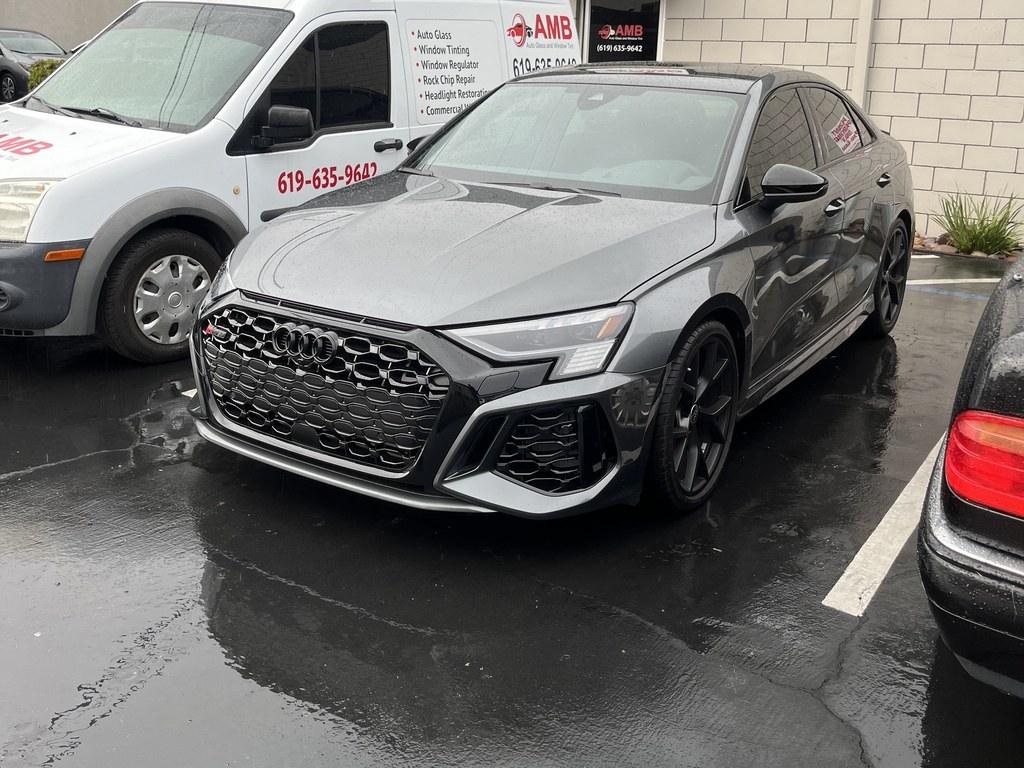
Most of the year, a chip in your windshield is easy to ignore in San Diego. Then the first real storm rolls in, the wipers start smearing across a crack, and you notice a damp spot on the floor mat. That is usually when the calls for windshield replacement in San Diego start coming in at our Mission Gorge Road shop.
I’m Martin, owner of AMB Auto Glass & Window Tint. Below, I’ll walk you through what to check before the rain, which signs mean your windshield is worth having looked at, why the camera behind the glass may need calibrating after a replacement, and how long to wait before driving in wet weather.
Quick Answer: Your Pre-Rain Windshield Checklist
| What you notice | What it usually means | What to do before the rain |
|---|---|---|
| A small chip away from the edges | Often repairable if caught early | Book a chip repair before temperature swings and wipers spread it |
| A crack that is growing or reaches the edge | Repair is unlikely to hold | Plan a replacement |
| Water on the dash, floor or headliner after rain or a car wash | Water is getting in somewhere, and the windshield seal is one possibility | Have it inspected so the actual source is found before anything is resealed or replaced |
| Wipers chatter or streak over damaged glass | Rough glass or worn blades | Replace blades and fix the glass so the wipers can clear the view |
| Lane or collision warnings act up after glass work | The forward camera may be out of alignment | Ask for ADAS calibration |
When Is the Rainy Season in San Diego?
According to the National Weather Service in San Diego, the city averages about 10 inches of rain a season, and 85 percent of it falls from November through March. That means most of our rain arrives in a few months, often after a long dry stretch.
During a long dry stretch, nothing really tests your windshield. A small leak has no water to let in, wipers sit unused, and a chip can go unnoticed for months. When the first storms arrive, those problems tend to show up all at once, which is why it pays to check the glass before the rain rather than after.
Should You Repair or Replace Your Windshield Before the Rain?
Start with the size and location of the damage. A small chip that is not in the driver’s direct line of sight and not near the edge of the glass is often a good candidate for windshield repair, which lets you keep your original glass.
Replacement makes more sense when:
- The crack is long, spreading, or has branched out from a chip.
- The damage reaches the edge of the windshield, where it can weaken the glass and the seal.
- The damage sits right in front of the driver and distorts the view.
- There are several chips or cracks across the glass.
There is also a legal side. California Vehicle Code section 26710 makes it unlawful to drive on a highway when the windshield is so defective that it impairs the driver’s vision to the front or rear. An officer can direct the driver to fix it within 48 hours.
Rain can make a crack harder to live with. Water on the glass adds to any distortion the crack already causes, and wiper blades may skip or leave streaks where they pass over the damaged area, so part of your view stays wet. At night, a crack on wet glass can also spread the light from oncoming headlights into glare, right when you need the clearest view.
What Are the Signs Your Windshield Seal Is Leaking?
The windshield is bonded to the car’s frame with a urethane adhesive that keeps water out and holds the glass in place. Water inside the car can come from a few places, though, so treat the signs below as a reason to book an inspection rather than proof that the windshield seal has failed. Look for:
- Damp carpet or floor mats in the front footwells after rain or a car wash.
- Water stains or drips along the top of the dashboard, the A-pillars or the headliner.
- Fogging that will not clear, or a musty smell inside the car.
- New wind noise or whistling at highway speed.
- Rust or bubbling paint around the windshield frame.
- A gap, lifted molding or cracked trim along the edge of the glass.
A quick test: on a dry day, have someone run a garden hose gently over the windshield edges while you watch inside with a flashlight. Do not use a pressure washer, which can push water past a seal that is fine in normal rain. If water does show up, it is still worth a professional look, because leaks from door seals, sunroof drains or clogged drains below the windshield can end up in the same spots.
Can a leaking windshield be fixed without replacing it?
It depends on what the inspection finds. The first step is confirming where the water is actually coming from and whether the urethane bond itself is still sound. A surface sealant does not restore a windshield bond that has failed or separated, so if the bond is the problem, the usual fix is removing the glass and reinstalling or replacing it, with the frame prepped and the work done to the vehicle maker’s and adhesive maker’s procedures. We look at it in person before recommending anything.
Why Does ADAS Calibration Matter After Windshield Replacement?
Many newer cars have a forward-facing camera mounted behind the windshield, near the rearview mirror. It powers driver assistance features. The NHTSA explains that lane departure warning uses a camera to detect when the vehicle is drifting out of its lane, and lane centering assistance uses a camera-based vision system to keep the car centered.
On most of these vehicles, the camera bracket is attached to the glass. When the windshield is replaced, the camera comes off and goes back on the new glass, and its aim can shift slightly. A camera that is a fraction of a degree off can misjudge where the lane is.
Automakers take this seriously. In its windshield replacement position statement, General Motors says a calibration or learn procedure is critical whenever a front view windshield camera or sensor is removed, reinstalled or replaced, or when the windshield itself is replaced. Other brands publish their own procedures, so we follow the steps for your make and model.
At AMB, when your windshield has a camera, we re-install and re-calibrate it as part of the job. Learn more on our ADAS camera calibration page.
Mobile vs In-Shop Windshield Replacement in San Diego: Which Is Better in Winter?
We offer mobile windshield replacement, and for many drivers it is the easiest option: we come to your home or office. In the rainy season, though, a few things decide where the job should happen.
| Factor | Mobile service | In-shop service |
|---|---|---|
| Convenience | We come to you | You drop off the car at 5841 Mission Gorge Rd, Suite A |
| Weather | Needs dry conditions or covered parking | Done indoors, rain or shine |
| Adhesive cure | Depends on outdoor temperature and humidity | More predictable conditions |
| Camera calibration | Depends on the vehicle and the procedure it needs | Controlled space for procedures that need it |
If rain is in the forecast, a covered garage or carport makes mobile service much more practical. If your car needs a calibration procedure that calls for a controlled setup, we will tell you up front and may suggest the shop instead. Either way, call us and we will help you pick the right option for your vehicle and your schedule.
How Long Until You Can Drive in the Rain After a New Windshield?
There is no single number that applies to every car. The industry standard for auto glass replacement, ANSI/AGRSS 002, defines minimum drive-away time as the time a specific adhesive system needs to reach the strength required to meet federal safety standards. It requires installers to follow the adhesive maker’s instructions, including drive-away charts that account for temperature and humidity, and to tell the vehicle owner the minimum drive-away time for that installation.
That strength matters. Federal Motor Vehicle Safety Standard 212 (49 CFR 571.212) exists to keep the windshield in place during a crash so it can do its job and help prevent occupants from being ejected.
So ask your installer two questions: which adhesive are you using, and what is my minimum drive-away time today? Cool, damp days can change the answer. After that, our guide to what to do after car windshield replacement covers tape, car washes and other aftercare.
Don’t forget the wipers
California Vehicle Code section 26707 requires windshield wipers to be kept in good working condition and able to clear the windshield in ordinary storm conditions. Fresh blades on fresh glass are an easy win before the first storm. Avoid running dry wipers over new glass, and clear grit off the windshield before using them.
OEM vs Aftermarket Glass: Which Should You Choose?
OEM glass is made to the automaker’s specifications for your vehicle. Aftermarket glass is made by other manufacturers to fit the same vehicle. For many cars, both are options.
Your choice matters more if your car has a windshield camera or other sensors. Some automakers state a clear preference. GM, for example, says in the same position statement that it does not approve aftermarket or non-GM original equipment glass for windshield replacement on its vehicles.
What to ask before you book:
- Does my vehicle have a camera, rain sensor, heads-up display or heated wiper area on the windshield?
- Is the glass you are quoting OEM or aftermarket, and does it match those features?
- Is calibration included, and how will I know it was completed?
- What adhesive will you use, and what is the minimum drive-away time?
If you plan to file a claim, coverage depends on your policy. Our post on windshield replacement in California and what insurance covers explains what to check with your insurer. We work with insurance companies and can help with the paperwork.
Frequently Asked Questions
Is it illegal to drive with a cracked windshield in California?
California Vehicle Code section 26710 makes it unlawful to drive when the windshield is so defective that it impairs the driver’s view to the front or rear. Whether a specific crack meets that test depends on its size and location, so it is safest to fix damage in your line of sight quickly.
Can I get my windshield replaced in the rain?
Yes, in our shop. Mobile replacement needs dry conditions or a covered space like a garage or carport so the adhesive and the frame stay dry during installation.
How do I know if my car needs ADAS calibration?
If your car has lane departure warning, lane keeping, automatic emergency braking or a camera near the rearview mirror, it likely needs calibration after a windshield replacement. We check your vehicle’s features when you request a quote.
Can a chip spread when it rains?
Rain on its own does not crack glass, but water and grit can work into a chip, and temperature swings plus wiper pressure can help it spread. Repairing a small chip early is usually quicker and less expensive than replacing the windshield later.
How much does windshield replacement cost in San Diego?
It depends on the vehicle, the type of glass, and features like cameras and sensors that may need calibration. Call us or request a quote with your year, make and model for an exact price.
Book Windshield Replacement Before the Next Storm
Don’t wait for a soaked floor mat or a crack that grows across your view. Whether you need a quick chip repair, a full replacement with camera calibration, or mobile service at your home or office, our team can help.
Call AMB Auto Glass & Window Tint at (619) 514-3537, visit us at 5841 Mission Gorge Rd, Suite A, San Diego, CA 92120, or book your windshield replacement in San Diego online.